Erasmus+ Project: Second Mobility Successfully Held in North Macedonia
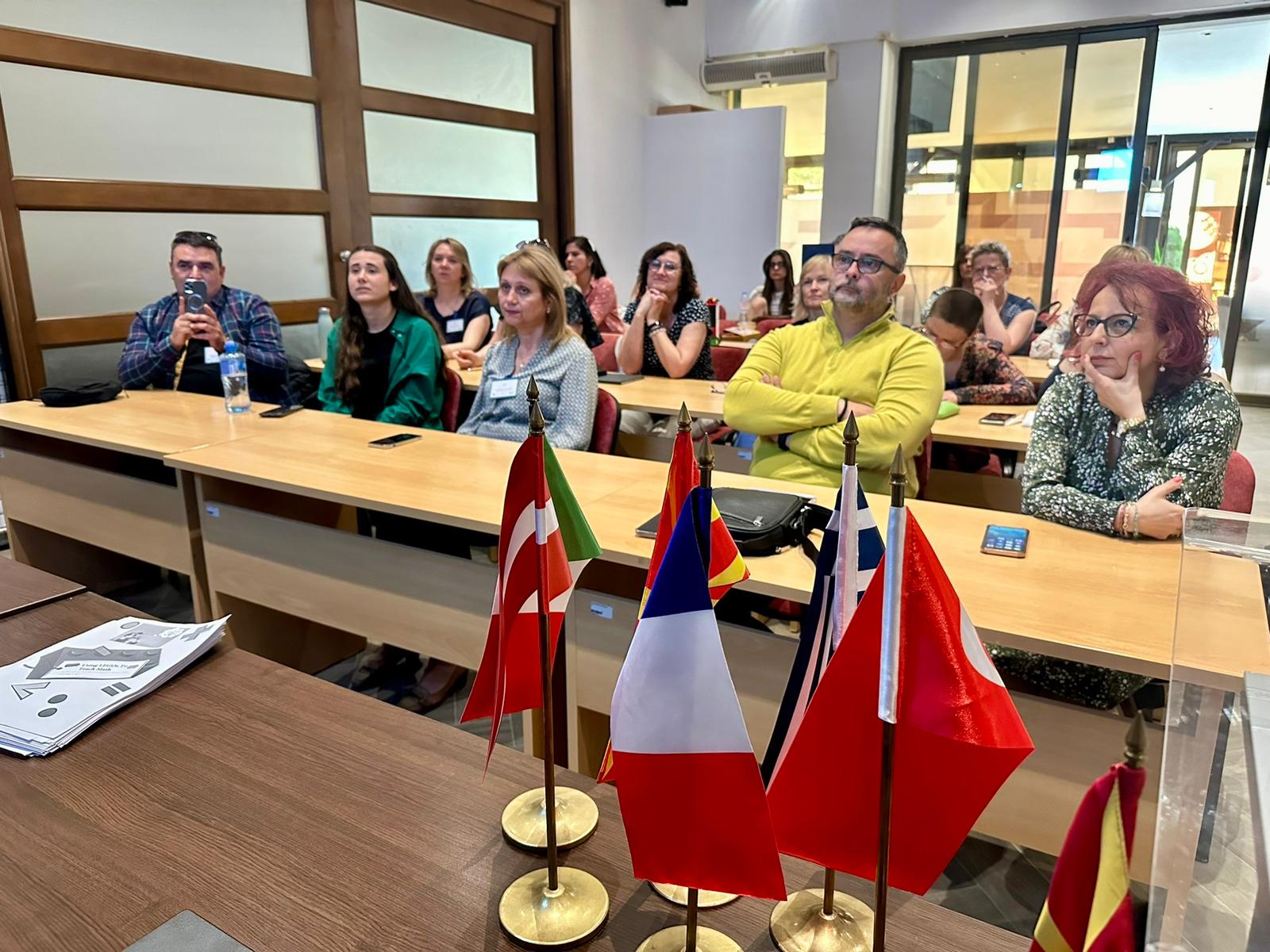
The second mobility of the Erasmus+ project “Robotics and Inclusion of Students with Disabilities in Special Education” was successfully conducted from January 22-26, 2024, in Štip, North Macedonia. Hosted by Goce Delčev State University, this mobility brought together teachers and experts from partner countries, including France, Turkey, Italy, Latvia, Greece, and North Macedonia, to continue the collaborative efforts toward integrating robotics into special education.
The second mobility of the Erasmus+ project “Robotics and Inclusion of Students with Disabilities in Special Education” was successfully conducted from January 22-26, 2024, in Štip, North Macedonia. Hosted by Goce Delčev State University, this mobility brought together teachers and experts from partner countries, including France, Turkey, Italy, Latvia, Greece, and North Macedonia, to continue the collaborative efforts toward integrating robotics into special education.
Activities During the North Macedonia Mobility
The North Macedonia mobility focused on conducting field research and advancing the development of robotics education for Special Educational Needs (SEN) students. Key activities included:
Field Survey on Robotics Education:
Goce Delčev State University conducted a comprehensive field survey to analyze the current state of robotics education in various countries. Statistical data and best practices were shared to provide insights into how robotics education can be effectively implemented in special education.
Development of Educational Materials:
Partner organizations collaborated on creating materials for teachers to use with SEN students. These materials aim to enhance the teaching process by integrating robotics and innovative teaching methodologies.
Framework for Robotics Education:
Participants worked on refining the framework for robotics education, focusing on how these technologies can address the unique needs of SEN students. Discussions included the design and functionality of educational robots.
Teacher Training and Collaboration:
Teachers and staff from partner countries participated in workshops and training sessions to improve their skills in using robotics in classrooms. The sessions also provided an opportunity for participants to exchange ideas and share experiences.
Digital Tools and Dissemination:
The use of digital tools, such as eTwinning and social media platforms, was emphasized to facilitate collaboration and dissemination of project outcomes. Riga 5th Primary School played a key role in uploading materials to TwinSpace and sharing updates on social media.
Significance of the North Macedonia Mobility
This mobility marked a crucial step in the project’s mission to promote inclusivity and innovation in special education. By conducting field research and developing educational materials, the project partners made significant progress toward creating a comprehensive robotics education framework for SEN students. The collaboration among partner organizations also strengthened the project’s foundation for future activities.
Next Steps in the Project
Following the success of the North Macedonia mobility, the project will move forward with the development and testing of educational robot prototypes. The next mobility, scheduled to take place in Turkey, will focus on the engineering and operational aspects of the educational robot. By the end of the project, a fully functional educational robot and a detailed guide for teachers will be completed.
We extend our gratitude to all participants and partners for their contributions to this important phase of the Erasmus+ project. Stay tuned for more updates as we continue to work toward achieving our goals.
#ErasmusPlus #RoboticsEducation #SpecialEducation #InclusionThroughInnovation #DigitalTransformatio